Configure
Target, assay conditions, controls, comparators and candidates.
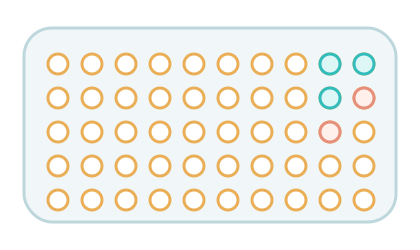

SYGPeD™ turns a targeted biological interaction into a quantitative readout to compare, prioritize and confirm research candidates. The platform is primarily focused on immune-checkpoint R&D, with PD‑1/PD‑L1 as its reference module.
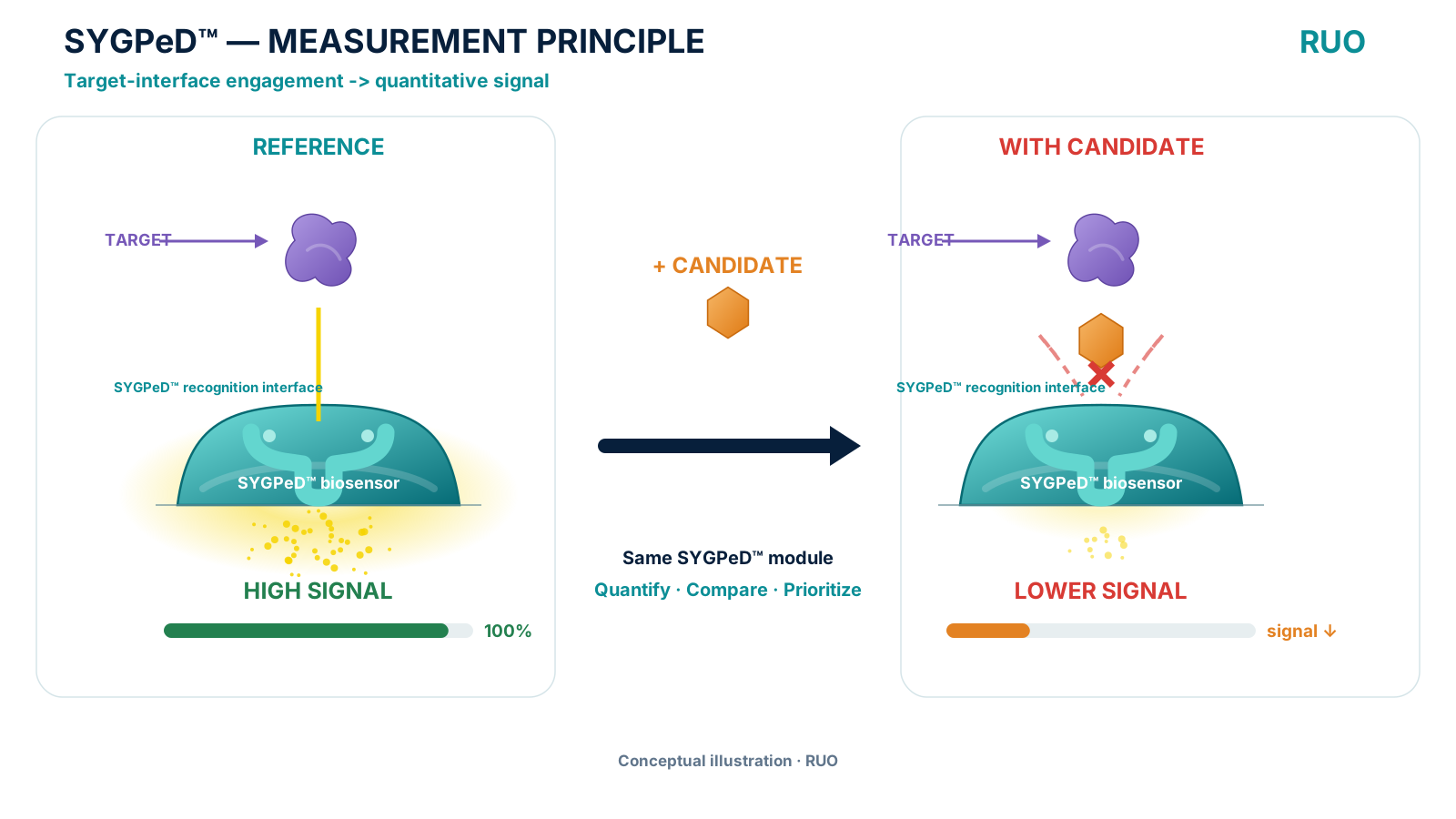
Target–interface engagement → quantitative signal. Conceptual illustration.
SYGPeD™ provides a comparative assay-level readout to support candidate selection and organize confirmation steps.
Document candidate interaction with its target.
Quantitatively compare candidate impact in the assay context.
Target, assay conditions, controls, comparators and candidates.
Acquire the signal with a readout system compatible with the module.
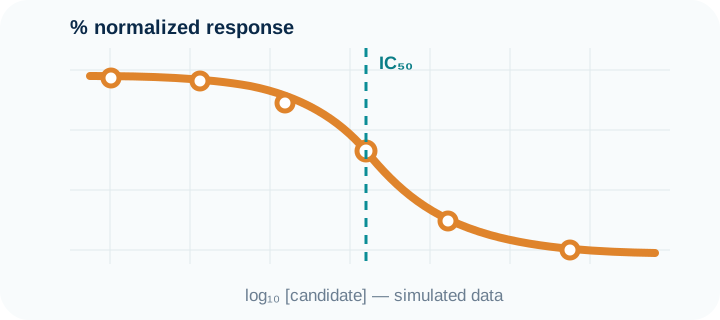
Normalize, compare and confirm by dose-response where appropriate.
* Indicative timing depends on module and protocol.
Compare candidate series and prioritize hits for confirmation.
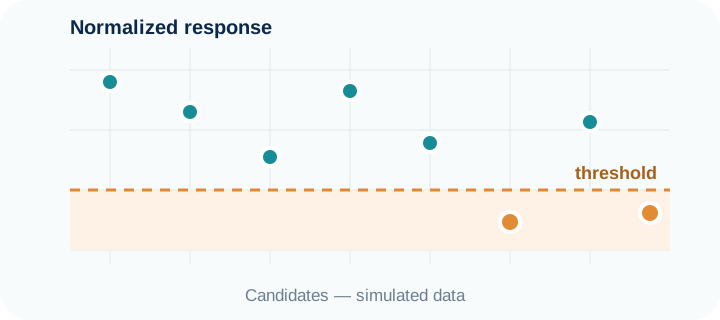
Compare profiles and estimate IC₅₀ when supported by experimental design and quality criteria.
Conceptual illustrations; demonstration charts are not experimental data unless explicitly stated.
Measure candidate effects on a targeted biological interaction.
Develop programs aimed at introducing a functional experimental criterion earlier in biomolecule prioritization.
PD‑1/PD‑L1 is the reference immune-checkpoint module. Experimental validation on HER2, EPO and several cytokine models supports the adaptability of the SYGPeD™ architecture.
Screening and characterization of candidates targeting checkpoint–ligand interactions.
HER2, EPO and cytokine models illustrate the ability to configure the architecture around different biological targets.
New research directions are explored with hospital, academic and industry teams.
A focused pilot can frame feasibility, controls and the experimental decision you need to make.