Recognize
A SYGPeD™ interface configured for the target establishes the reference condition.

SYGPeD™ is SYG BIOTECH’s quantitative functional biosensing platform, primarily focused on immune-checkpoint R&D. It compares candidate effects at the level of the interaction under study.
A reference condition measures target engagement with the SYGPeD™ recognition interface. In the presence of a candidate, perturbation of that engagement produces a measurable signal change.
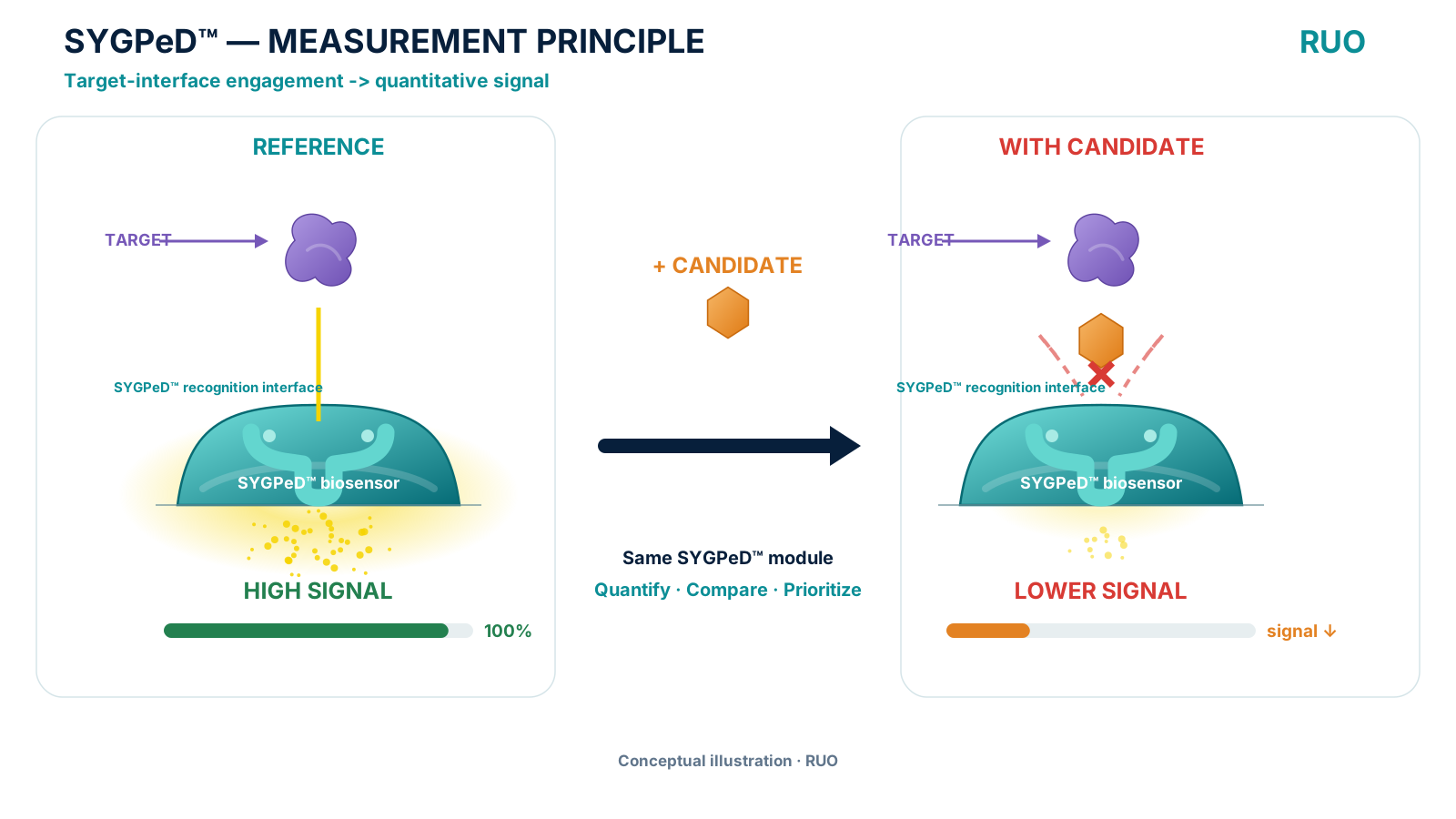
The public site explains the assay at the level needed to understand its logic: a dedicated recognition interface engages the target, the biosensor translates that event into a measurable signal, and the readout is compared across conditions.
A SYGPeD™ interface configured for the target establishes the reference condition.
Target engagement is converted by the biosensor into a measurable signal.
The signal is normalized and compared to measure candidate effect.
SYGPeD™ converts a targeted interaction into a quantitative readout that can support screening and confirmation workflows.
The module is configured around a defined biological interaction and suitable controls.
Signal change supports condition comparison and candidate prioritization.
The same framework can support initial screening followed by dose-response confirmation.
PD‑1/PD‑L1 is the reference immune-checkpoint module. Experimental validation on HER2, EPO and several cytokine models supports platform modularity. Performance remains specific to each module and protocol.
Comparative readout, screening and dose-response confirmation depending on configuration.
Module implemented experimentally.
Module implemented experimentally.
Several models used to evaluate architecture adaptability.
Define target, candidates, controls and assay conditions.
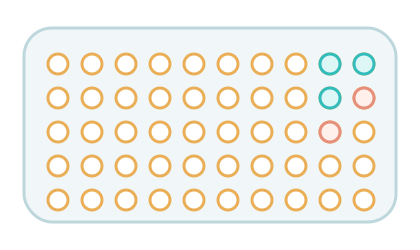
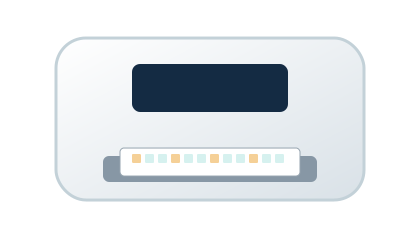
Read the luminescent signal with a system compatible with the module.
Normalize, compare, prioritize and confirm by dose-response where appropriate.
* Indicative timing depends on module and protocol.
Compare a candidate series using defined controls and prioritize hits.
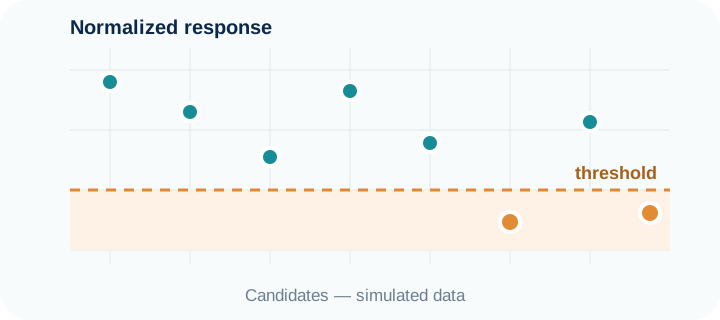
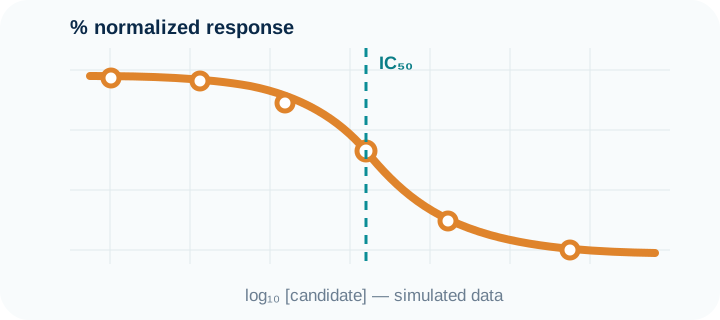
Confirm selected candidates and estimate IC₅₀ when supported by design and quality criteria.
Conceptual illustrations; demonstration charts are not experimental data unless explicitly stated.
Antibodies, VHHs, DARPins, peptides and other formats can be studied depending on the module.
Evaluation is framed according to the experimental configuration and appropriate controls.
Feasibility for a new module is defined with the partner before the study.
We can frame a pilot study around a target, controls and a clear experimental decision.